
Introduction
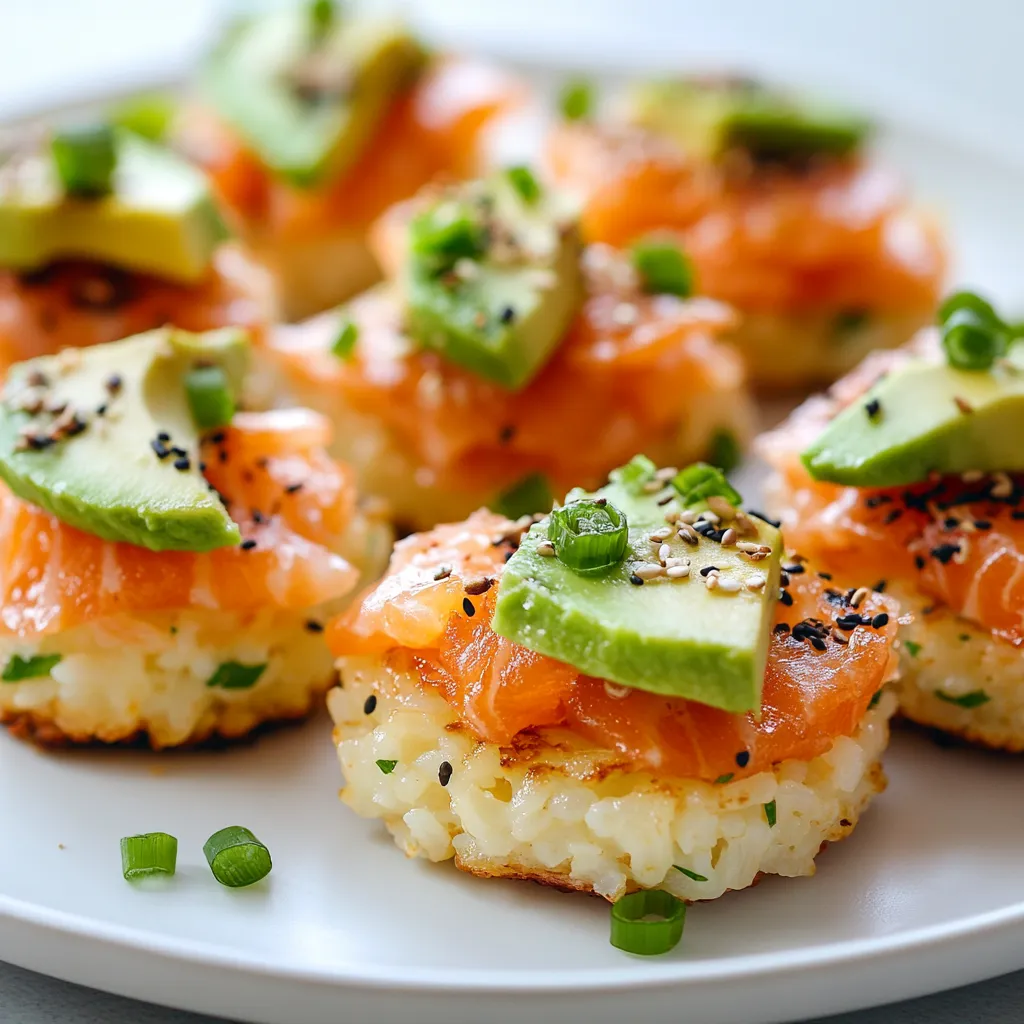
Salmon Crispy Rice Delight is a unique and delectable dish that combines the rich flavors of seared salmon with the satisfaction of crispy rice cakes. This dish beautifully juxtaposes textures, featuring the crunchy exterior of the rice cakes and the tender, flaky salmon on top. It is perfect for showcasing a special meal at home or serving as an elegant appetizer at gatherings.
This recipe is an exquisite option for sushi lovers looking to experience a new twist on traditional ingredients. Perfect for dinner parties, it draws attention with its vibrant colors and enticing flavors, making it a visual and culinary delight. With its Asian-inspired components, this dish will impress any guest while satisfying their taste buds.
Recipe Overview
– Total Time: 50 minutes
– Prep Time: 20 minutes
– Servings: 4
– Difficulty: Not specified in the recipe
Ingredients
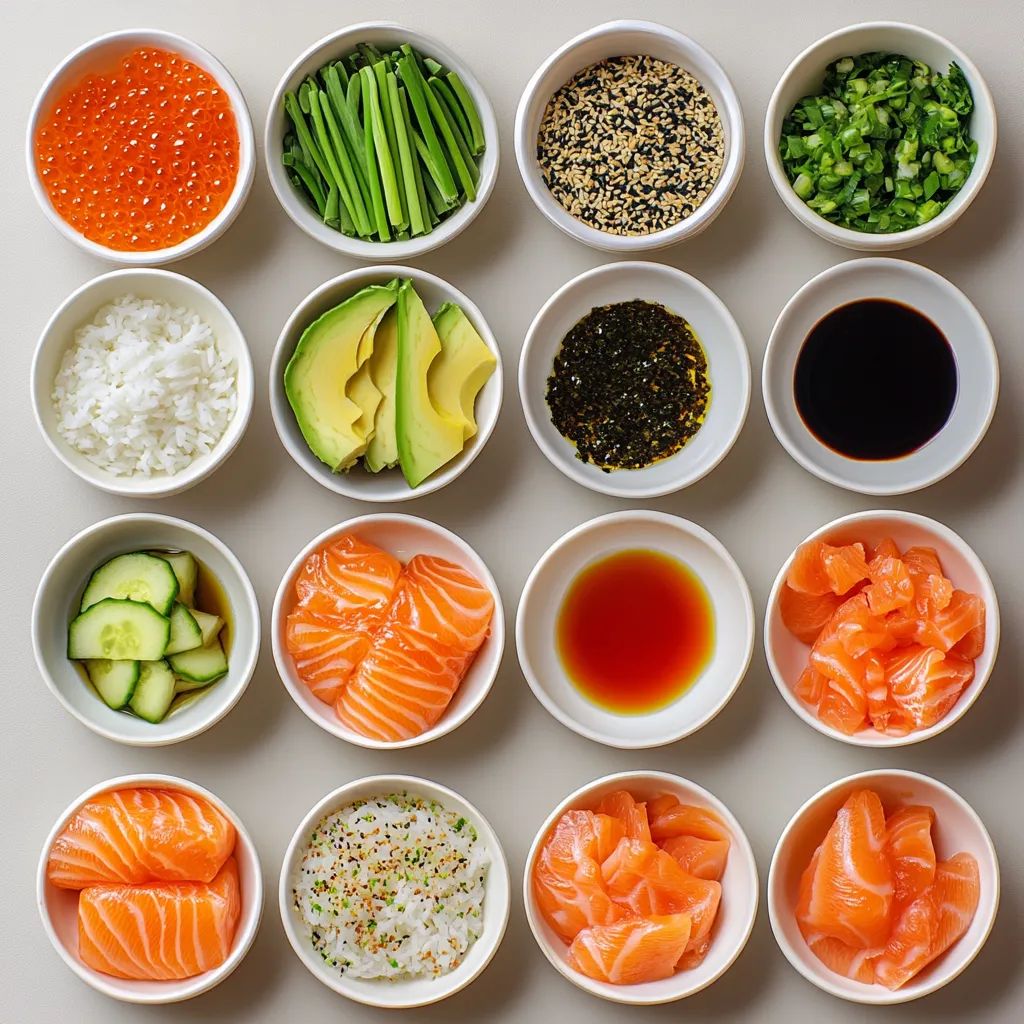
– 1 cup sushi rice
– 1 ¼ cups water
– 1 tablespoon rice vinegar
– 1 tablespoon granulated sugar
– ½ teaspoon salt
– 6 ounces fresh salmon fillet, skin removed
– 1 tablespoon soy sauce
– 1 teaspoon sesame oil
– 1 ripe avocado, thinly sliced
– 2 green onions, finely chopped
– 1 tablespoon furikake (Japanese rice seasoning)
– 1 tablespoon vegetable oil (for frying)
– Pickled ginger, for serving
– Wasabi, for serving
Preparing the Sushi Rice
Rinsing the Rice
The first step in crafting the perfect sushi rice starts with rinsing. Begin by measuring 1 cup of sushi rice, a unique type of rice characterized by its short and sticky grains ideal for sushi dishes. Place the rice in a fine-mesh strainer or bowl, and thoroughly rinse it under cold running water. Rinsing helps remove excess surface starch, which is crucial for achieving the desired texture—neither too sticky nor too dry. Continue rinsing until the water runs clear to ensure the rice is properly cleaned.
Cooking Instructions
In a medium saucepan, combine the rinsed sushi rice with 1 ¼ cups of water. This ratio of rice to water is key in yielding perfectly cooked and fluffy rice. Place the saucepan over high heat and bring the mixture to a boil. Once it reaches a rolling boil, immediately reduce the heat to low and cover the saucepan with a lid. It is essential to keep the lid on during cooking to allow the rice to steam effectively. Let it simmer for about 18 minutes or until all the water has been absorbed.
Letting the Rice Steam
After cooking, remove the saucepan from the heat, but do not lift the lid just yet. Allow the rice to sit for an additional 10 minutes. This steaming process finishes the cooking and gives the rice time to firm up slightly, creating the ideal texture for forming cakes later in the recipe.
Seasoning the Rice
Mixing the Seasoning Ingredients
While the rice steams, you can focus on preparing the sushi rice seasoning. In a small bowl, whisk together 1 tablespoon of rice vinegar, 1 tablespoon of granulated sugar, and ½ teaspoon of salt until both the sugar and salt are fully dissolved. This sweet and tangy mixture will enhance the flavor of the sushi rice, adding a characteristic taste that makes sushi rice stand out.
Incorporating Seasoning into the Rice
Once the sushi rice has completed its steaming, it’s time to incorporate the seasoning. Fluff the rice gently with a fork to loosen the grains, being careful not to mash them. Gradually fold in the vinegar mixture, ensuring that it evenly coats all of the rice grains. This step is crucial as it gives the rice its signature flavor while maintaining the integrity of the grains.
Cooling the Rice
After seasoning, spread the rice onto a large plate or tray to help it cool more quickly. Allow the rice to reach room temperature before shaping it into cakes. Cooling the rice is essential; too much heat when forming the cakes can cause them to break apart.
Cooking the Salmon
Preparing the Salmon Fillet
While the rice cools, focus your attention on the salmon fillet. Start with 6 ounces of fresh salmon, ensuring the skin has been carefully removed. To infuse the salmon with flavor, drizzle it with 1 tablespoon of soy sauce and 1 teaspoon of sesame oil, using your hands to coat the fillet evenly.
Cooking Techniques for Searing
Once prepared, heat a non-stick skillet over medium heat, which helps prevent the salmon from sticking during cooking. Carefully place the salmon fillet into the skillet and sear it for approximately 3-4 minutes on one side. This technique allows for a nice crust to form, enhancing the texture and flavor. Flip the fillet carefully and continue cooking on the other side until fully cooked, which should be around the same time, or until the salmon flakes easily when tested with a fork.
Flaking the Salmon
After searing, remove the salmon from the skillet and set it aside to cool slightly. Once cool enough to handle, flake the salmon into bite-sized pieces using a fork or your hands, ensuring the pieces are manageable for topping the crispy rice cakes later.
Forming the Crispy Rice Cakes
Wetting Your Hands
Before starting to shape the sushi rice into cakes, it is essential to wet your hands with water. This prevents the rice from sticking to your fingers, making the shaping process much easier and more efficient. A little water goes a long way in ensuring that the rice retains its form without becoming overly wet during assembly.
Shaping Techniques
With about 2 tablespoons of rice in your hands, begin shaping it into small rectangular or square cakes. Press firmly yet gently to ensure they hold together but be careful not to compress the rice too much, or it may lose its desired texture.
Ensuring Cakes Hold Their Shape
When shaping the rice cakes, aim for uniformity in size for even cooking later on. The cakes should be small enough to make serving easy but large enough to hold the salmon and avocado topping comfortably. After forming each cake, set them aside on a plate, ready for frying.
Frying the Rice Cakes
Preparing the Skillet
Next, use the same skillet that you used to cook the salmon—instead of washing it, this method retains the salmon’s flavors in the oil you’re about to use. Add 1 tablespoon of vegetable oil to the skillet and heat it over medium-high heat. Ensure the oil is hot enough before adding the rice cakes to achieve that perfect golden brown color.
Frying Strategies
Gently place the formed rice cakes into the hot oil, taking care not to overcrowd the skillet. Fry them for about 2-3 minutes on each side, allowing the outside to crisp while keeping the inside tender. The goal is to create a delightful contrast in texture that complements the salmon and avocado.
Checking for Doneness
The rice cakes will be ready to be flipped when they develop a beautiful golden-brown crust. Use a spatula to carefully turn them over and continue cooking until the second side matches the first in color and texture. Once done, transfer the crispy rice cakes to a paper towel-lined plate to drain away any excess oil, preserving their crispiness.
Assembling the Dish
With all components prepared, the assembly is quite simple yet rewarding. Start by placing a generous piece of the flaked salmon on top of each crispy rice cake. Following that, add a thin slice of ripe avocado to each. For an extra touch of flavor and artistry, sprinkle a layer of furikake, a Japanese seasoning that enhances the dish with umami and texture. Finally, garnish with finely chopped green onions to add a fresh contrast to the richness of the salmon and avocado.
The Salmon Crispy Rice Delight is now ready to be arranged beautifully on a serving platter. The addition of pickled ginger and a dollop of wasabi alongside not only adds to the visual appeal but also introduces a dynamic range of flavors that enhance this delightful creation.
Layering Ingredients
For the Salmon Crispy Rice Delight, the order and method of layering ingredients are crucial to achieving a well-balanced flavor profile. Starting with the crispy rice base, ensure each rice cake is thoroughly cooled before topping it with flaked salmon. This step is essential, as warm rice can soften the salmon, leading to a less appealing texture. Upon adding the salmon, the creamy avocado slices should be positioned on top. The marriage of the crispy texture from the rice cakes, the flaky salmon, and the smooth avocado creates a delightful mouthfeel.
Using the Furikake Seasoning
Furikake serves as a quintessential finishing touch for the salmon crispy rice cakes. A popular Japanese seasoning mix, furikake often contains dried fish, seaweed, sesame seeds, and sometimes shiso leaves. This seasoning adds not only a burst of umami flavor but also an aromatic nuttiness that complements the fresh salmon and creamy avocado. When sprinkling furikake, consider the quantity; a light dusting will impart flavor without overwhelming the other ingredients, allowing each element to shine individually while contributing to the overall dish.
Adding Garnishes
To elevate the presentation and flavor of your Salmon Crispy Rice Delight, garnishing is key. Chopped green onions add a fresh, crisp bite that contrasts beautifully with the richer textures. Additionally, if you enjoy some heat, a pinch of sliced chili can be added for a pop of color and flavor. For a more refined touch, consider edible flowers or microgreens, which can introduce an aesthetic element while marrying well with the dish’s flavor profile. Just remember, garnishes should enhance, not distract from, the main components.
Serving the Dish
Presentation Ideas
Arranging Salmon Crispy Rice Delight on a platter could be as simple or sophisticated as you prefer. For a casual setting, serve the rice cakes in a single layer, neatly lined up, showcasing the golden brown color. For a more elevated presentation, create a staggered look, partially overlapping some crispy rice cakes for visual interest. Consider using a wooden board or a slate platter to add rustic charm, which can enhance the organic qualities of the dish.
Accompaniments for Enhanced Flavor
Pairing the Salmon Crispy Rice Delight with complementary sides can elevate the meal. A side of pickled vegetables can provide a tangy contrast, cutting through the richness of the salmon and avocado. A light salad with a citrus vinaigrette can also be refreshing and balance the flavors beautifully. Additionally, a dipping sauce made from soy sauce mixed with a touch of ginger or a squeeze of lemon can enhance the overall dining experience.
Serving Suggestions
This dish shines best when served immediately after frying to maintain its crispy texture. If serving at a gathering, arrange the rice cakes and toppings so guests can assemble their own. This interactive approach adds an engaging element to the dining experience while allowing for personal preference in how much of each topping to use.
Optional Presentation Tips
Adding Visual Appeal
Visual aesthetics play a vital role in food presentation. Use vibrant, colorful plates or bowls that contrast with the dish components. A white plate can make the colors pop, emphasizing the lush green of the avocado and the vibrant orange of the salmon. Utilizing contrasting colors and shapes, like angular rice cakes on a round plate, can create an artistic presentation.
Incorporating Citrus Elements
Incorporating citrus fruits can add both visual appeal and a fresh flavor dimension. Consider placing thin lime or lemon slices artfully around the platter or even on top of each rice cake. The acidity from the citrus offsets the richness of the dish, enhancing the overall taste experience.
Utilizing Decorative Plating Techniques
For those looking to engage in more intricate plating techniques, consider using a ring mold to stack the salmon and avocado on the rice cakes for a tiered effect. This not only looks appealing but also allows each bite to include equal parts of all components. Drizzling a soy reduction or chili oil around the dish can provide a splash of color while adding a subtle flavor enhancement.
Nutritional Information
Macronutrients Breakdown
While specific nutritional values may vary based on exact ingredients and portion sizes, Salmon Crispy Rice Delight generally boasts a balanced macronutrient profile. A typical serving may include approximately 400-500 calories, depending on the amount of oil used for frying and the size of the rice cakes. Proteins from the salmon provide essential amino acids, while healthy fats from both the fish and avocado contribute to satiety.
Health Benefits of Key Ingredients
Salmon is renowned for its omega-3 fatty acids, which support cardiovascular health and brain function. Avocado is rich in monounsaturated fats, potassium, and vitamins C, E, and K, contributing to heart health and skin vitality. Sushi rice, while primarily a carbohydrate source, offers quick energy, and combining it with nutritious toppings helps create a balanced meal.
Caloric Considerations
When considering calories, keep in mind that portion control is essential. Adjust the serving size based on dietary goals, ensuring fullness and satisfaction without excessive caloric intake. The preparation can also be modified—baking instead of frying can cut down on oil usage, making this dish lighter while retaining its flavor.
Variations and Substitutions
Alternative Proteins
If salmon isn’t available or if you prefer a different protein source, options such as seared tuna, grilled chicken, or even marinated tofu can serve as excellent substitutes. Each protein will impart a unique flavor, while still complementing the dish’s overall profile.
Vegetarian Options
For those seeking a vegetarian version, replace the salmon with marinated and pan-fried eggplant or a mix of sautéed mushrooms. Both options can mimic the texture of the fish while allowing the other ingredients to shine. Consider using a vegan mayonnaise or a tahini sauce instead of the traditional toppings.
Ingredient Swaps
If you’re unable to find furikake, feel free to create a simple mixture of toasted sesame seeds, nori flakes, and a pinch of salt to replicate its flavors. Adjust seasonings based on what is available, but be mindful that texture and taste may vary slightly.
Storage Tips
Refrigeration Guidelines
If you have leftover crispy rice cakes, store them in an airtight container in the refrigerator for up to two days. To maintain quality, it’s best to keep the rice cakes separate from the salmon and avocado.
Freezing Recommendations
While freezing is not recommended for fully assembled rice cakes, you can freeze any unshaped, cooked sushi rice for later use. Ensure it’s cooled completely before transferring it to airtight containers made for freezing. Note that thawing may alter the texture slightly, but it remains an option for meal prep.
Reheating Methods
To reheat leftover rice cakes, utilize an oven or air fryer to regain their crispness, preheating to 350°F (175°C) for about 10 minutes until warmed through. Microwave reheating may result in a doughy texture, which can be avoided by using dry heat methods.
Conclusion
Salmon Crispy Rice Delight is a beautifully layered dish that harmonizes rich and fresh flavors with contrasting textures. Following the outlined steps and considerations ensures that every bite remains satisfying and delicious. With a total preparation time of approximately 50 minutes, this dish is perfect for showcasing culinary skills while offering a delightful dining experience.
Salmon Crispy Rice Delight Recipe
Ingredients
- 1 cup sushi rice
- 1 ¼ cups water
- 1 tablespoon rice vinegar
- 1 tablespoon granulated sugar
- ½ teaspoon salt
- 6 ounces fresh salmon fillet skin removed
- 1 tablespoon soy sauce
- 1 teaspoon sesame oil
- 1 ripe avocado thinly sliced
- 2 green onions finely chopped
- 1 tablespoon furikake Japanese rice seasoning
- 1 tablespoon vegetable oil for frying
- Pickled ginger for serving
- Wasabi for serving
Instructions
-
Rinse sushi rice under cold water until clear, then combine with water in a saucepan and boil.
-
Reduce heat, cover, and simmer for 18 minutes until water is absorbed, then let sit for 10 minutes.
-
Whisk rice vinegar, sugar, and salt in a bowl until dissolved, then fold into cooled rice.
-
Heat a skillet, coat salmon with soy sauce and sesame oil, and sear for 3-4 minutes per side.
-
Let salmon cool slightly, then flake into bite-sized pieces.
-
Wet hands and shape rice into small cakes, pressing firmly.
-
Heat vegetable oil in the skillet and fry rice cakes for 2-3 minutes per side until golden brown.
-
Top each rice cake with flaked salmon and avocado, then sprinkle with furikake and green onions.
-
Serve on a platter with pickled ginger and wasabi on the side.