
Introduction
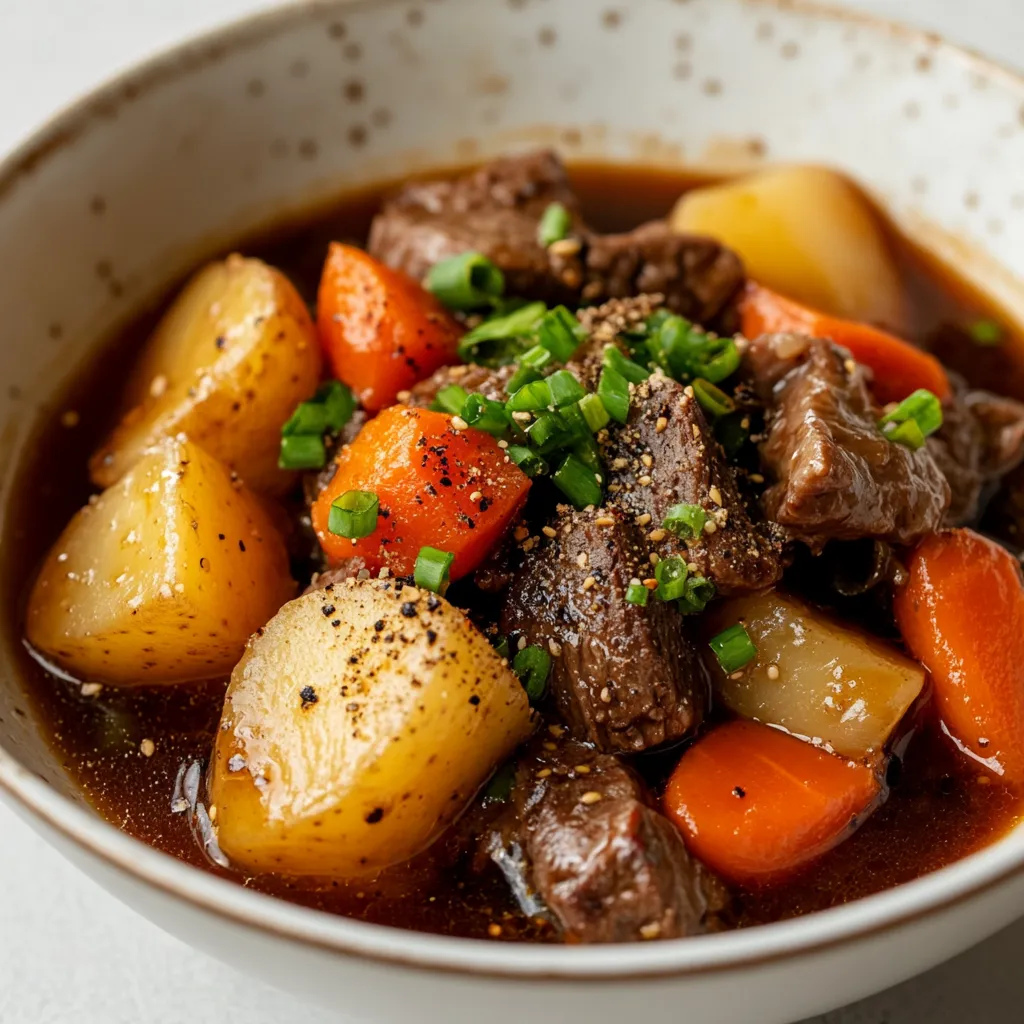
The comforting embrace of Japanese cuisine can often be found in its warm, hearty dishes that bring both flavor and nostalgia to the table. One such dish is Nikujaga, a beloved one-pot stew that embodies the heart of home-cooked Japanese meals. This recipe showcases tender beef, vivid vegetables, and a savory broth, making it a go-to favorite in households across Japan. With its roots deeply embedded in the daily lives of families, Nikujaga is not just a meal; it conjures memories of home, love, and care.
Nikujaga, which literally translates to “meat and potatoes,” is a harmony of flavors that perfectly illustrates the beauty of simplicity in cooking. The combination of thinly sliced beef, sweet carrots, and earthy potatoes simmered in a rich broth creates a dish that is not only filling but also incredibly satisfying. This dish is a testament to the Japanese culinary philosophy of employing minimal ingredients to produce maximum flavor, making it ideal for those seeking a warm and comforting dinner option.
Perfect for chilly evenings or casual family gatherings, Nikujaga is a dish that brings everyone together around the table. The mild flavors are pleasing to the palate, making it a hit among both children and adults alike. Whether served on a weeknight or during a special occasion, this stew promises to warm your heart and spirit.
Recipe Overview
– Total Time: 45 minutes
– Servings: 4
– Difficulty: Not specified in the recipe
Ingredients
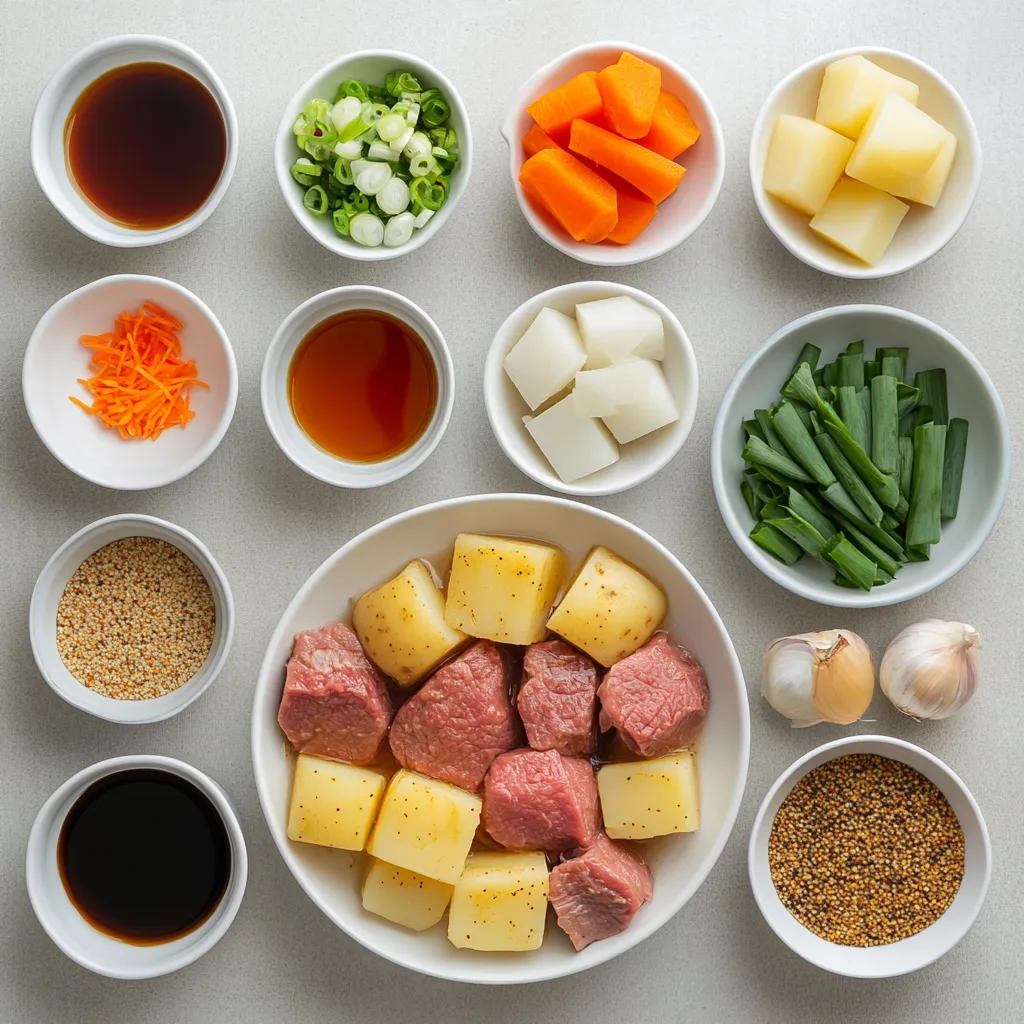
– 300g (10.5 oz) thinly sliced beef (such as sirloin or ribeye)
– 3 medium potatoes, peeled and cut into bite-sized pieces
– 2 medium carrots, sliced into rounds
– 1 medium onion, thinly sliced
– 1 cup (240ml) dashi stock (or beef stock)
– 4 tablespoons soy sauce
– 2 tablespoons mirin (sweet rice wine)
– 1 tablespoon granulated sugar
– 2 tablespoons vegetable oil
– 2 green onions, finely chopped (for garnish)
– Fresh shichimi togarashi (optional, for serving)
Instructions
1. Prepare the Ingredients: Begin by peeling the potatoes and carrots. Chop the potatoes into bite-sized pieces and slice the carrots into rounds. If your beef is not pre-sliced, thinly slice it now. Also, slice the onion into thin strips.
2. Sauté the Beef: In a large pot or Dutch oven, heat the vegetable oil over medium heat. Add the thinly sliced beef to the pot and sauté it for about 3-4 minutes, or until it begins to brown and is no longer pink.
3. Add Onions: Once the beef has browned, incorporate the sliced onion into the pot. Continue to cook for an additional 2-3 minutes, stirring occasionally, until the onions become soft and translucent.
4. Combine Vegetables: Add the chopped potatoes and sliced carrots to the pot. Stir everything together, ensuring the vegetables are well mixed with the beef and onions.
5. Add Liquids: Pour in the dashi stock (or beef stock), followed by the soy sauce, mirin, and sugar. Stir the mixture thoroughly to combine, making sure the vegetables are submerged in the liquid.
6. Simmer: Increase the heat to bring the mixture to a gentle boil. Once boiling, reduce the heat to low, cover the pot, and let it simmer for about 20-25 minutes. This will allow the potatoes and carrots to become tender and absorb the flavors.
7. Adjust Seasoning: After simmering, taste the stew and adjust the seasoning as needed. If you prefer a sweeter taste, feel free to add a little extra sugar or mirin to enhance the flavor.
8. Serve: Once the vegetables are tender, ladle the Nikujaga into bowls. Garnish each serving with finely chopped green onions and, if desired, a sprinkle of shichimi togarashi for an extra kick.
9. Enjoy: Serve the stew hot alongside steamed rice for a comforting and hearty meal.
Preparing the Ingredients
The Importance of Fresh Ingredients
Selecting the freshest ingredients can significantly enhance the taste of your Nikujaga. Opting for fresh vegetables and high-quality beef will not only improve the stew’s flavor but also its nutritional value. Fresh potatoes should be firm and smooth, while vibrant carrots add a bright splash of color. The quality of beef is equally crucial; tender cuts like sirloin or ribeye will melt in your mouth and impart a luscious base to the stew.
Prep Steps for Vegetables
Begin by peeling the potatoes and carrots. This step ensures that no bitter skin interferes with the stew’s sweetness. Once peeled, chop the potatoes into bite-sized pieces and slice the carrots into rounds. Not only do these shapes cook uniformly, but they also create a delightful texture contrast when served in the finished dish.
Preparing the Beef and Onion
If your beef isn’t pre-sliced, make sure to thinly slice it. The method of slicing against the grain will yield tender pieces that integrate perfectly into the stew. Additionally, slice the onion into thin strips to promote even cooking. As the onion softens, it releases its natural sugars, adding depth and sweetness to the overall flavor profile of the Nikujaga.
Sautéing the Beef
Choosing the Right Pot
A large pot or Dutch oven is ideal for making this stew, allowing ample space for all ingredients. The pot should have a lid for proper simmering, promoting even cooking and flavor melding among the beef and vegetables.
Searing the Beef
Heat vegetable oil over medium heat, then add the beef. Sauté for approximately 3-4 minutes until it begins to brown and is no longer pink. This step is vital as it builds a flavorful base through the browning process, known as the Maillard reaction.
The Perfect Browning Technique
Ensure that the beef is evenly spaced in the pot to achieve that perfect sear, contributing to deeper flavors. Overcrowding the pan can cause steaming instead of browning, so it’s essential to work in batches if necessary. Proper browning not only enhances the visual appeal of the stew but also elevates the overall seasoning profile.
Adding the Onions
Importance of Softened Onions
The onions add sweetness and depth to the dish, enhancing the overall flavor profile. Sautéed onions become tender and translucent, releasing their sugars and blending seamlessly into the stew. This process not only enriches the flavor but also creates a base that harmonizes the meaty and earthy notes of the vegetables, making the final dish balanced and comforting.
Cooking the Onions
In this recipe, the onions are added after the beef has browned, ensuring their natural sweetness and flavor meld wonderfully with the meat. Upon incorporation, they should be cooked for an additional 2-3 minutes until they soften and become translucent. This process is essential, as it allows the onions to release their aromatic essence, which enhances the overall flavor profile of the stew.
Combining the Vegetables
Mixing for Flavor
Once the onions have reached the desired tenderness, the next step is to introduce the chopped potatoes and sliced carrots into the pot. It is crucial to mix these ingredients gently to ensure that they are evenly distributed throughout the beef and onion mixture. This careful blending helps each vegetable to absorb the flavors from the beef and the aromatic onions, resulting in a more harmonious taste in each bite.
Texture and Balance
Maintaining the integrity of the vegetables is vital during this step. While combining, take care not to mash the potatoes or carrots, as they should remain distinct and retain a pleasant bite. This not only contributes to the overall texture of the dish but allows each component to offer its unique character within the stew.
Adding the Liquids
Dashi Stock vs. Beef Stock
When deciding between dashi stock and beef stock, consider the flavor profiles each provides. Dashi, a traditional Japanese broth made from kelp and bonito flakes, offers a lighter, umami-rich flavor that complements the beef and vegetables without overwhelming them. On the other hand, beef stock adds a deeper, heartier flavor to the dish. Opt for dashi to maintain a more authentic Japanese profile, or choose beef stock if you prefer a stronger meat flavor.
Incorporating Soy Sauce, Mirin, and Sugar
Once you’ve selected your stock, pour it into the pot along with the soy sauce, mirin, and sugar. Stir the mixture thoroughly to combine all the ingredients. This step is where the magic happens—sugars from the mirin and granulated sugar will start to caramelize as the stew simmers, while the soy sauce imparts its saltiness and richness, creating a deliciously balanced broth.
Simmering the Nikujaga
Bringing to a Gentle Boil
Following the addition of the liquids, increase the heat to bring the mixture to a gentle boil. It is crucial to monitor this stage closely as boiling too hard can cause the vegetables to break down more than desired. Once boiling is achieved, promptly reduce the heat to low to facilitate a slow simmer, allowing the flavors to meld and the vegetables to tenderize gently over time.
Proper Covering Techniques
Covering the pot during this simmering stage is essential. It helps to retain moisture, creating a steamy environment inside the pot that ensures all ingredients cook evenly. The 20-25 minutes of simmering will allow the potatoes and carrots to become tender, absorbing the broth’s flavors while maintaining their individual textures.
Adjusting Seasoning
Tasting for Perfect Balance
Once the simmering time has elapsed, it is important to taste the stew before serving. This step allows you to achieve the perfect balance of flavors. Depending on your preference, you may find that the stew could benefit from slight adjustments, whether it’s a dash more soy sauce, a pinch more salt, or additional sugar for sweetness.
Sweetness Variations
If you enjoy a sweeter Nikujaga, this is the moment to add more sugar or mirin. These ingredients enhance the natural sweetness of the onions and carrots while ensuring a rich flavor without veering too far into dessert territory.
Serving the Nikujaga
Presentation for Appeal
Presentation plays a significant role in elevating the dining experience. Serving Nikujaga in deep, rustic bowls not only accentuates the comforting nature of the dish but also invites guests to dig in. The colorful array of the beef, potatoes, and vegetables is visually appealing and allows the dish’s heartiness to shine.
Garnishing Techniques
For garnish, finely chopped green onions add a fresh crunch and vivid color, contrasting beautifully with the stew’s warm tones. If desired, a sprinkle of shichimi togarashi can be offered for a spicy kick, allowing each guest to customize their bowl according to their taste preferences. This small touch can really enhance the overall experience of enjoying Nikujaga.
Enjoying the Dish
Pairing Suggestions
Once served, Nikujaga is best enjoyed hot, accompanied by a generous serving of steamed rice. The rice acts as a perfect base, soaking up the rich broth and enhancing the flavors of the stew. Each spoonful of Nikujaga alongside the creamy rice creates a fulfilling synergy, ensuring that every bite is satisfying.
Family or Gatherings
Nikujaga is not only a comfort food but also an excellent choice for family gatherings or celebrations. Its communal nature allows everyone to serve themselves from the pot, fostering a sense of togetherness around the dining table. Sharing this dish represents a warm invitation to connect with loved ones, making mealtime more special.
Conclusion
Nikujaga presents a delightful harmony of tender beef, soft potatoes, and hearty carrots, all infused with rich, savory broth. Its balance of flavors and textures culminates in a comforting meal that can be ready in under an hour, making it perfect for busy evenings or relaxed weekends alike. This dish encapsulates both warmth and nourishment, inviting enjoyment for all at the table.
One Pot Nikujaga – Japanese Beef and Potato Stew
Ingredients
- 300 g thinly sliced beef
- 3 medium potatoes
- 2 medium carrots
- 1 medium onion
- 1 cup dashi stock
- 4 tablespoons soy sauce
- 2 tablespoons mirin
- 1 tablespoon granulated sugar
- 2 tablespoons vegetable oil
- 2 green onions finely chopped for garnish
- to taste shichimi togarashi optional
Instructions
-
Peel and chop the potatoes and carrots, and slice the onion and beef if not pre-sliced.
-
Heat vegetable oil in a large pot over medium heat and sauté the beef until browned.
-
Add the sliced onion and cook until soft and translucent.
-
Stir in the chopped potatoes and sliced carrots, mixing well.
-
Pour in the dashi stock, soy sauce, mirin, and sugar, stirring to combine.
-
Bring to a gentle boil, then reduce heat, cover, and simmer for 20-25 minutes.
-
Taste and adjust seasoning with more sugar or mirin if desired.
-
Ladle into bowls and garnish with green onions and shichimi togarashi if using.
-
Serve hot with steamed rice.