
Introduction
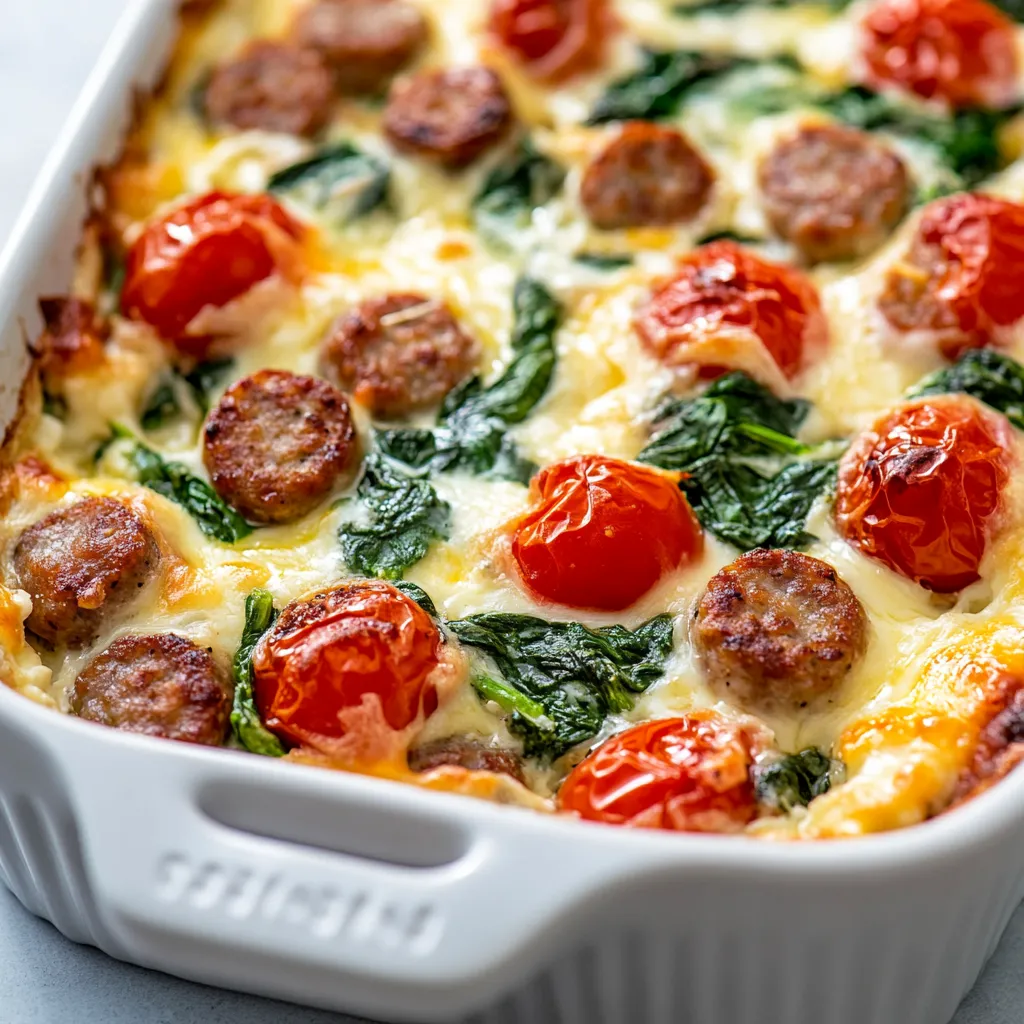
The Cheesy Sausage, Spinach, and Tomato Egg Casserole is a delightful dish that seamlessly blends savory ingredients into a comforting, baked meal. This dish brings together the heartiness of Italian sausage, the freshness of spinach, and the sweetness of cherry tomatoes, all enveloped in a rich egg mixture. The kaleidoscope of flavors makes it a versatile recipe that can be served during family brunches, festive gatherings, or simply as a fulfilling breakfast to kickstart your day.
What sets this casserole apart is not just its delicious taste but also its ease of preparation. With minimal hands-on time, this baked dish allows you to spend more time with family and friends and less time in the kitchen. Whether you’re looking for a quick solution to feeding a crowd or simply a way to enjoy a nutritious meal, this casserole fits the bill perfectly. As we dive into the details of making this delightful recipe, you’ll find it becomes a staple in your meal rotation, delightfully easy and impressively tasty.
Recipe Overview
This section provides a snapshot of what to expect from the Cheesy Sausage, Spinach, and Tomato Egg Casserole. It showcases the key attributes of the dish, honing in on its ingredients, preparation, and overall appeal.
– Prep Time: Not specified in the recipe
– Cook Time: Not specified in the recipe
– Total Time: Not specified in the recipe
– Course: Not specified in the recipe
– Cuisine: Not specified in the recipe
– Servings: Not specified in the recipe
– Calories: Not specified in the recipe
Ingredients
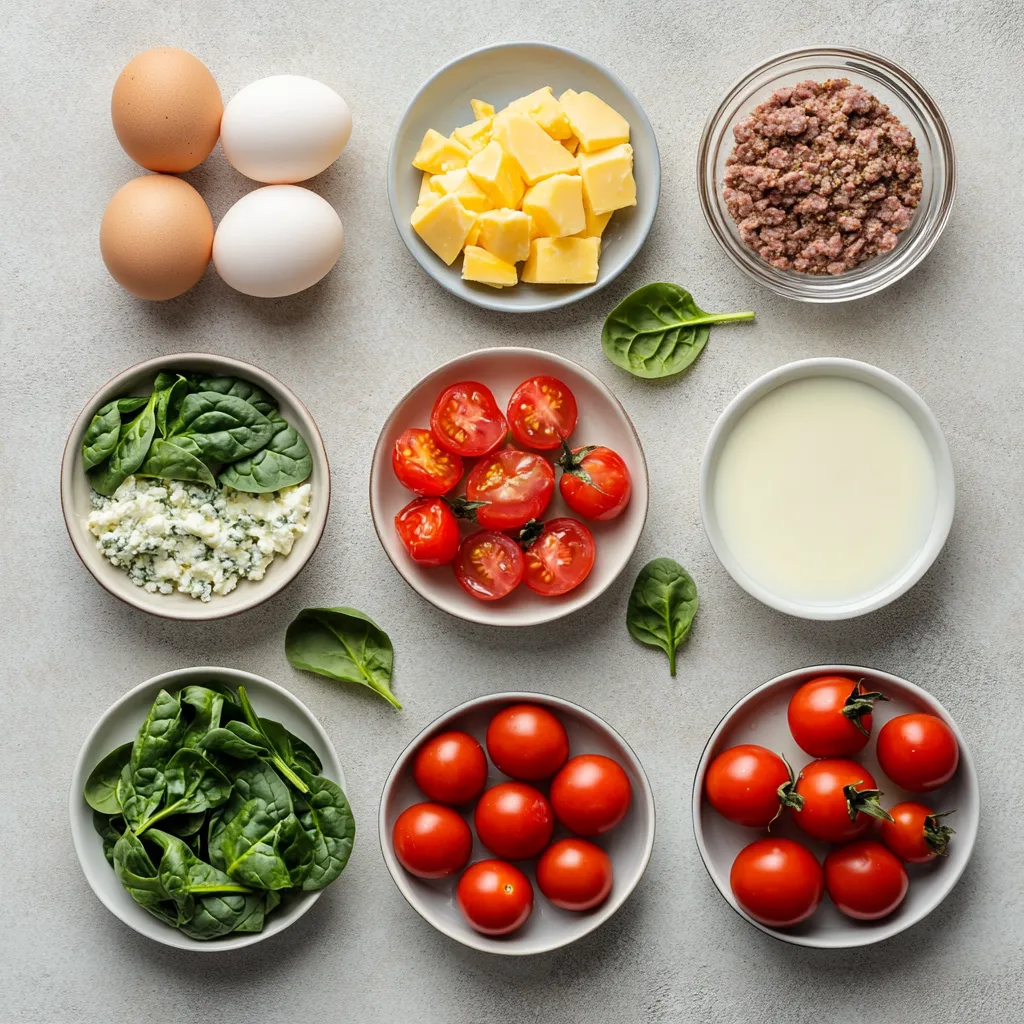
An essential part of any recipe, this section details all the necessary ingredients to prepare the casserole, highlighting their respective roles in achieving the dish’s flavor profile.
– 1 pound Italian sausage, casings removed
– 2 cups fresh spinach, roughly chopped
– 1 cup cherry tomatoes, halved
– 6 large eggs
– 1 cup whole milk
– 1 cup shredded sharp cheddar cheese
– 1 teaspoon garlic powder
– Salt and black pepper, to taste
– 1 teaspoon olive oil
– 1/2 teaspoon dried oregano
Main Ingredients
The heart of the casserole lies in its main ingredients. The Italian sausage serves as not just a protein source but brings depth and crucial savory notes to the dish. When cooked, it emits a delightful aroma that sets the tone for the rest of the casserole. Fresh spinach adds a pop of green and is packed with vitamins, providing a nutritious balance to this satisfying meal. Meanwhile, cherry tomatoes not only infuse a sweet juiciness but also a splash of color, making the dish visually appealing.
Dairy Components
The eggs are the cornerstone of the casserole, acting as the binding agent that holds everything together while providing essential protein. The inclusion of whole milk enhances the richness and creaminess of the final dish, ensuring each bite melts in your mouth. And let’s not forget the shredded sharp cheddar cheese that not only gives a divine taste but also contributes to that delightful melty texture on top.
Seasonings
In seasoning this casserole, garlic powder adds a layer of flavor that elevates the overall taste, while dried oregano brings an aromatic freshness that complements the savory elements beautifully. Salt and black pepper are quintessential for enhancing and balancing the flavors, ensuring that each component shines through.
Preparation Tools
To achieve this delectable casserole, a few essential kitchen tools are required: a skillet to brown the sausage and sauté the vegetables effectively, a 9×13 inch baking dish for assembling and baking the casserole, and a large mixing bowl for combining the egg mixture, ensuring all ingredients meld together perfectly.
Instructions
Breaking down the preparation into detailed steps allows readers to easily follow along, ensuring a successful cooking experience.
1. Begin by preheating your oven to 350°F (175°C). Lightly grease a 9×13 inch baking dish with olive oil to prevent sticking.
2. In a skillet set over medium heat, add the Italian sausage. Cook for approximately 5-7 minutes, breaking it apart with a spatula until it is nicely browned and crumbled.
3. Incorporate the chopped spinach and halved cherry tomatoes into the skillet. Stir and cook for an additional 2-3 minutes, or until the spinach has wilted and the tomatoes are slightly softened.
4. In a large mixing bowl, whisk together the eggs, whole milk, garlic powder, dried oregano, salt, and black pepper until you achieve a smooth and uniform mixture.
5. Fold the cooked sausage, spinach, and tomato mixture into the egg mixture, ensuring everything is evenly combined.
6. Pour this hearty mixture into the prepared baking dish, spreading it out evenly. Top it off by sprinkling the shredded sharp cheddar cheese generously across the surface.
7. Bake the casserole in the preheated oven for 30-35 minutes. It’s ready when the eggs are set and the cheese has melted, bubbling, and turned a lovely golden brown.
8. Once baked, allow the casserole to cool for a few minutes. Then, slice into squares and serve warm.
Preheating and Preparing the Baking Dish
Preheating the oven is vital as it ensures that the casserole will cook evenly and thoroughly. This step also helps to achieve that lovely golden-brown top as soon as it goes in for baking. Greasing the baking dish lightly with olive oil ensures that your casserole will easily release once baked, making for much simpler serving and clean-up.
Cooking the Sausage and Vegetables
Browning the Italian sausage develops a rich, savory flavor that forms the backbone of the casserole. As the sausage cooks, you can break it apart with a spatula, ensuring that it crumbles nicely, which allows for the even distribution of flavors throughout the dish. Once the sausage is nicely browned, adding the chopped spinach and cherry tomatoes not only enhances the nutritional value but also introduces freshness that offsets the richer components. Cooking them for just a few minutes allows the spinach to wilt and the tomatoes to soften slightly, marrying their flavors before mixing them into the egg mixture.
Whisking the Egg Mixture
Achieving a smooth egg mixture is crucial for a fluffy and cohesive casserole. Whisking together the eggs with whole milk, garlic powder, oregano, salt, and black pepper ensures that every ingredient is evenly incorporated, allowing for a uniform texture once baked. This step is essential to avoid clumps of ingredients and ensures that every bite provides a perfect blend of flavors and textures.
right type of baking dish for even cooking and browning.
Suggestions for Incorporating Air into the Eggs for a Fluffier Casserole
Achieving a fluffy texture in your Cheesy Sausage, Spinach, and Tomato Egg Casserole starts with how you whisk your eggs. When whisking, it’s essential to incorporate as much air as possible. Using a larger bowl can help create more surface area, allowing you to beat the eggs vigorously without splattering. Aim for around 3-5 minutes of whisking until the mixture is light and frothy; this aeration will significantly enhance the fluffiness of your casserole once baked.
Additionally, consider using a whisk instead of a fork. A whisk allows for better aeration due to its design, which captures air more efficiently as you mix. For an even fluffier texture, you can separate the egg whites from the yolks, whip the whites until soft peaks form, and then gently fold them back into the yolks merged with the other ingredients. This technique elevates the fluffiness to another level, ensuring that your casserole is not just tasty but also airy and light.
Combining Ingredients
When combining the sausage and vegetable mixture with the egg mix, it’s crucial to do this gently to preserve the air you’ve incorporated. Begin by adding a small portion of the egg mixture into the sausage and vegetable mix, stirring lightly to combine. Once that’s integrated, gradually fold the rest of the egg mixture into the skillet. Use a spatula to gently lift and fold the ingredients rather than stirring vigorously, which can cause the mixture to lose volume.
Ensure that you’re evenly distributing the sausage, spinach, and tomatoes throughout the egg mixture. This means taking the time to fold the components together; it’s this careful incorporation that leads to a well-distributed casserole where every bite is packed with flavor.
Assembling the Casserole
For an optimal casserole, evenly distributing the mixture in the greased baking dish is important. Pour a layer of the mixture into the baking dish, then use a spatula to spread it out, ensuring corners and edges receive equal attention. This prevents some parts from being undercooked while others end up overcooked.
When it comes to adding cheese, layering it on top will ensure that you get an even melt and a beautifully browned crust. Make sure to spread the shredded sharp cheddar cheese uniformly across the surface. A thicker layer of cheese will create a more decadent top, while a lighter sprinkle can lead to a more subtle flavor. The key is to ensure that every part of the casserole is topped with cheese, as it helps in forming that delicious golden brown layer during the baking process.
Baking Process
For perfect doneness, the recommended baking time for this casserole is 30-35 minutes. During this period, the eggs will set, the cheese will melt, and the casserole will attain a golden brown color. However, baking timelines can slightly vary based on your oven’s calibration or the specific baking dish used.
To verify if your casserole is ready, look for a few telltale signs. The eggs should be firm and not jiggly, while the cheese will be bubbling and golden brown. You can also perform a toothpick test; if it comes out clean from the center, your casserole is good to go. Allow the casserole to cool for a few minutes before slicing to ensure that it remains intact when serving.
Serving Suggestions
Offering varied serving ideas enhances the enjoyment of the dish and encourages creativity. When it comes to serving, consider presenting the casserole warm on a rustic wooden board to highlight the hearty nature of the dish. Garnishing with freshly chopped basil or a sprinkle of parsley can add a lovely contrast to the rich colors of the casserole. This not only makes for an appealing plate but also provides an aromatic element that complements the flavors.
The casserole pairs wonderfully with sides that balance its richness. A light fruit salad comprising mixed berries, melons, or citrus can provide refreshing notes alongside the savory flavors of the dish. Alternatively, a light salad made of arugula dressed with olive oil, lemon juice, and a sprinkle of seeds can offer a peppery and nutty contrast, rounding out the meal.
Storage and Reheating Tips
To maintain freshness, store leftovers in an airtight container in the refrigerator. It’s best to refrigerate your casserole within two hours of cooking to avoid any food safety risks. Consume chilled leftovers within 3-4 days for optimal flavor and safety.
When reheating, place slices of the casserole in the oven, covered with aluminum foil, at 350°F (175°C) for about 15-20 minutes until heated through. This method will help prevent the casserole from drying out while ensuring it retains its original texture. An alternative option is to microwave individual portions; just be mindful not to overcook them, as that can result in a rubbery texture.
Variations and Customizations
This section presents ways to modify the recipe, appealing to diverse tastes and dietary preferences.
Substituting Ingredients
For those looking to tweak the recipe, there’s a world of substitutes available. If you prefer a lighter option, turkey sausage can stand in effectively for its Italian counterpart. Moreover, for a vegetarian approach, consider using plant-based sausage or legumes, such as black beans or chickpeas, which will maintain the heartiness of the dish.
When it comes to cheese, you can experiment with varieties like mozzarella for a milder flavor or pepper jack for a spicy kick. Each type will impart a different character and richness, enriching your casserole experience.
Adding Extra Vegetables
Incorporating additional vegetables can offer nutritional boosts and varied flavors. Bell peppers, onions, or zucchini are excellent additions, each bringing their own taste and texture to the casserole. These additions not only enhance the nutritional profile but also introduce new flavor dimensions that complement the existing ingredients.
Making it Vegetarian
For a version that maintains hearty goodness without meat, switching to an all-vegetable mix is a great option. Using ingredients like sautéed mushrooms, sweet corn, or even artichokes can create a filling vegetarian casserole. The mixture of eggs, cheese, and a medley of veggies ensures it remains satisfying and delicious.
Flavor Profiles and Textures
Exploring the flavor and texture dimensions is crucial for understanding the dish’s appeal.
Balancing Savory and Fresh
The combination of sausage and cheese works beautifully with the fresh notes of spinach and tomatoes. The richness of the sausage complements the lightness of the fresh vegetables, creating a dynamic balance that makes each bite delightful.
The Role of Dairy
In this casserole, whole milk and cheese play a vital role in achieving a creamy consistency that contrasts handsomely with the hearty sausage. The incorporation of dairy fosters a moist dish that enhances the overall indulgence, ensuring each serving is rich without being overly heavy.
Importance of Seasoning
The careful use of garlic powder and oregano adds necessary depth, enhancing the primary flavors without overwhelming the dish. These seasonings are crucial for highlighting both the sausage and the vegetables, resulting in a well-rounded taste experience.
Cooking Techniques
A closer look at the cooking methods employed in this recipe has educational value, offering insights into corresponding techniques.
Browning vs. Steaming
Browning the sausage brings about a complex flavor profile, enhancing the umami notes of the dish that steaming simply can’t achieve. This contrast adds depth, making each forkful enjoyable.
The Art of Whisking
Effective whisking is integral to achieving a desirable texture in baked dishes. This process allows for a smooth blend of ingredients, creating an even batter that results in a perfect bake.
Baking Tips
Choosing an appropriate baking dish aids in even cooking and browning. Clear glass or metal pans heat differently; glass retains heat well, while metal cooks faster. Understanding these nuances helps in managing your baking times effectively to achieve the desired results.
In conclusion, the Cheesy Sausage, Spinach, and Tomato Egg Casserole is a delightful dish celebrated for its balance of flavors, ease of preparation, and adaptability. Whether enjoyed fresh out of the oven or as a make-ahead meal, its versatility fits numerous occasions, making it a timeless addition to any meal repertoire.

Cheesy Sausage, Spinach, and Tomato Egg Casserole
Ingredients
- 1 pound Italian sausage casings removed
- 2 cups fresh spinach roughly chopped
- 1 cup cherry tomatoes halved
- 6 large eggs
- 1 cup whole milk
- 1 cup shredded sharp cheddar cheese
- 1 teaspoon garlic powder
- Salt and black pepper to taste
- 1 teaspoon olive oil
- ½ teaspoon dried oregano
Instructions
- Preheat your oven to 350°F (175°C) and grease a 9x13 inch baking dish with olive oil.
- In a skillet over medium heat, cook the Italian sausage for 5-7 minutes until browned and crumbled.
- Add the chopped spinach and halved cherry tomatoes to the skillet, cooking for an additional 2-3 minutes until the spinach wilts.
- In a large bowl, whisk together the eggs, whole milk, garlic powder, dried oregano, salt, and black pepper until smooth.
- Fold the sausage, spinach, and tomato mixture into the egg mixture until well combined.
- Pour the mixture into the prepared baking dish and top with shredded cheddar cheese.
- Bake for 30-35 minutes until the eggs are set and the cheese is melted and golden brown.
- Allow to cool for a few minutes, then slice into squares and serve warm.