
Introduction
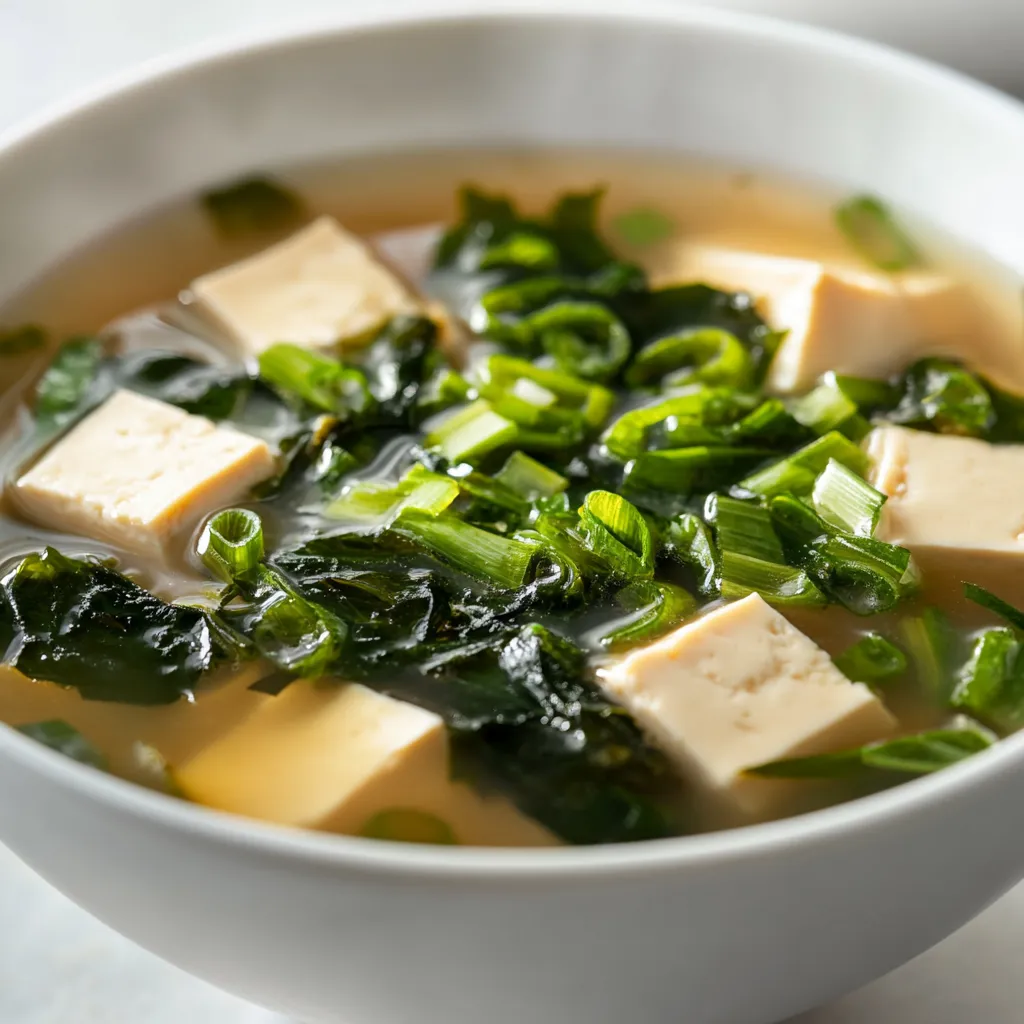
Miso soup is a beloved staple of Japanese cuisine, celebrated for its comforting warmth and umami-rich flavor. This soulful bowl of soup is not only nourishing but also represents a real culinary tradition in Japan. Made primarily from miso paste and dashi broth, it can be customized to include various ingredients depending on regional variations or personal preferences. This particular recipe features tofu and wakame seaweed, creating a delightful balance of taste and texture. The tender cubes of tofu soak up the flavors, while the wakame adds a unique depth to the broth.
Miso soup is versatile enough to be served at any time of the day, whether it’s a starter for a grand meal or a light lunch on a busy afternoon. It’s especially comforting during colder months, embodying the essence of warmth and comfort food. Plus, given its ease of preparation, this dish can be whipped up in just a matter of minutes, making it an excellent choice for both beginners in the kitchen and experienced cooks seeking a quick, delicious solution.
Recipe Overview
– Prep Time: 10 minutes
– Cook Time: 10 minutes
– Total Time: 20 minutes
– Course: Soup
– Cuisine: Japanese
– Servings: 4
– Calories: ~80 per serving
This miso soup recipe is straightforward yet packed with flavor, making it an ideal dish for beginners and seasoned cooks alike. With a prep time of just 10 minutes and a cooking time of another 10, you can have a nourishing bowl of miso soup ready in just 20 minutes. Perfect for four servings, each bowl contains approximately 80 calories, allowing for a light yet satisfying meal.
Ingredients
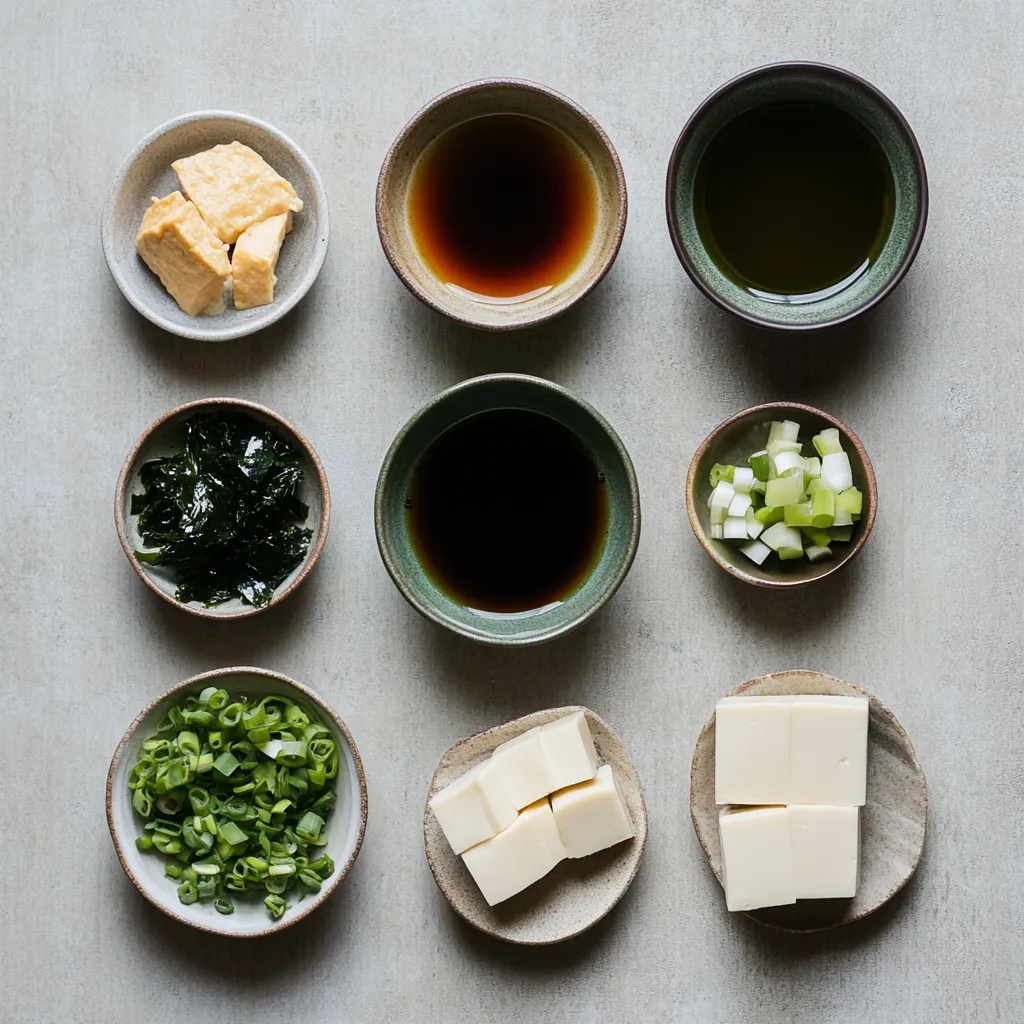
– 4 cups dashi broth
– 3 tablespoons miso paste (white or red, based on preference)
– 1 cup firm tofu, diced into bite-sized cubes
– 1/2 cup dried wakame seaweed, rehydrated in warm water
– 2 green onions, finely chopped (white and green parts separated)
– 1 tablespoon soy sauce (optional, for added depth)
Instructions
1. In a medium-sized pot, gently heat the dashi broth over medium heat until it begins to simmer. Avoid boiling to preserve the delicate flavors.
2. In a separate small bowl, take a ladleful of the hot dashi broth and mix it with the miso paste until it forms a smooth, lump-free mixture. This helps to incorporate the miso evenly into the soup.
3. Once the dashi broth is simmering, slowly pour the miso mixture back into the pot, stirring continuously to ensure it is well blended with the broth.
4. Carefully add the diced tofu to the soup, allowing it to warm through for about 2-3 minutes without boiling, so the tofu retains its texture.
5. Stir in the rehydrated wakame seaweed, allowing it to infuse its flavor into the soup for an additional minute.
6. Taste the soup and, if desired, enhance the flavor with a splash of soy sauce, stirring to combine.
7. Remove the pot from the heat and ladle the soup into bowls. Garnish with the chopped green onions, using the green parts for a fresh pop of color.
Flavor Profile
Umami Rush
Miso paste not only adds depth to the soup but also provides that signature umami taste loved in many Japanese dishes. The rich and complex flavors from the fermented soybeans in miso contribute to the overall savory profile of the soup. This depth of flavor is unmistakably comforting, creating a dish that feels both wholesome and indulgent.
Velvety Texture
The addition of firm tofu contributes a creamy texture that contrasts beautifully with the broth’s warmth. Tofu is renowned for its ability to absorb flavors while maintaining its own subtle characteristics. Its slight creaminess tempers the dashi broth and complements the umami taste of the miso, providing a satisfying bite and making each spoonful a delight to enjoy.
Seaweed Essence
Wakame seaweed introduces a marine essence, enriching the overall flavor of the soup. Its delicate flavor adds an extra layer of complexity, making the soup feel as if it has a deep connection to the ocean. The texture of the rehydrated wakame provides a nice chew, enhancing the soup’s overall experience. It not only contributes its unique flavor but also adds a nutritional boost, rich in vitamins and minerals.
Health Benefits
Miso soup is not just delicious; it comes with a host of health benefits that make it an excellent addition to your diet. Miso paste is fermented, which means it contains probiotics that can enhance gut health and improve digestion. The combination of dashi broth, made traditionally from fish or seaweed, lends essential omega-3 fatty acids and other nutrients vital for maintaining overall health. Tofu serves as a great source of plant-based protein and is rich in calcium, making it an excellent food choice for vegetarians and vegans. The seaweed is not only flavorful but also packed with minerals, particularly iodine, which supports thyroid health.
In summary, this miso soup with tofu and seaweed delights the palate while serving as a nourishing bowl of wellness, embodying the beauty of Japanese cooking. With its quick preparation time and flavorful profile, it is perfect for warming up on any occasion.
Low-Calorie Delight
Miso soup, with its remarkable flavor and comforting warmth, is a low-calorie delight that satisfies without guilt. At approximately 80 calories per serving, this soup not only nourishes your body but also aligns with various dietary goals. This makes it an ideal option for those looking to enjoy a satisfying meal while keeping calories in check. The combination of dashi broth, tofu, and seaweed creates a rich, umami experience that leaves you feeling full and satisfied.
Nutrient-Rich Ingredients
The ingredients in miso soup contribute to its status as a nutritious choice. Tofu, a key ingredient, is an excellent source of plant-based protein, essential for muscle maintenance and overall body function. It also contains healthy fats and is rich in isoflavones, which have been linked to various health benefits, including heart health and hormonal balance.
On the other hand, wakame seaweed is a powerhouse of vitamins and minerals—most notably iodine, calcium, and vitamins A, C, E, and K. These elements play crucial roles in supporting thyroid function, bone health, and immune responses. The combination of these ingredients makes miso soup not just a comforting dish, but a nutritionally balanced option for those mindful of their dietary choices.
Hydration Support
Staying hydrated is a vital aspect of health, especially during colder months when people often forget to drink enough water. Miso soup, made with dashi broth, offers a warming and hydrating option that contributes to your daily fluid intake. The light, broth-based nature of the soup helps to soothe the body while providing necessary hydration. This makes it not only perfect for a light starter but also a wonderful remedy for those chilly days when warmth and hydration are both needed.
Cooking Tips
Avoid Overheating
When preparing your miso soup, it is essential to maintain a moderate heat. Overheating can lead to boiling the dashi broth, which may strip it of its delicate flavors. By keeping the heat at medium, you allow all the ingredients to blend harmoniously, enhancing the overall taste. This mindful approach to temperature control helps preserve the nuanced umami notes that define authentic miso soup.
Miso Selection
Selecting the right type of miso paste is crucial for achieving the desired flavor in your soup. White miso, known for its mild and slightly sweet taste, is ideal for those who prefer a more delicate flavor profile. Red miso, on the other hand, offers a robust and saltier flavor, perfect for those who enjoy a more pronounced taste. Feel free to experiment with both types in small batches to discover which variety suits your palate best.
Tofu Variations
Although firm tofu is recommended for this particular recipe due to its sturdy texture that holds up well in the broth, there are other tofu options that can be explored. Soft or silken tofu could be used if you prefer a creamier texture, but be cautious as it may disintegrate more easily in the soup. If using a different variety, ensure that the tofu you select can maintain its integrity when heated to avoid a mushy end result.
Presentation Ideas
Traditional Bowls
Serving your miso soup in traditional Japanese bowls not only enhances the cultural experience but also adds a touch of authenticity. The classic designs and shapes of these bowls are designed to showcase the soup’s vibrant colors while providing a comfortable way to enjoy your meal. The elegance of these bowls can elevate even a simple soup into a delightful dining experience.
Simple Garnishes
To take your miso soup to the next level in terms of both aesthetics and flavor, consider adding garnishes. A sprinkle of sesame seeds offers a subtle crunch and nutty taste, while a drizzle of chili oil provides a touch of heat that can be adjusted to taste. These simple additions can enhance the experience, making the soup feel more special.
Serving Suggestions
Miso soup pairs beautifully with other quintessential Japanese dishes. Serving it alongside sushi creates a harmonious dining experience, as the flavors complement each other without overwhelming the palate. Similarly, a side of steamed rice or rice balls is an excellent way to round out the meal, providing a satisfying carbohydrate component.
Storage Instructions
Refrigeration
For those who find themselves with leftovers, proper storage is key to preserving the soup’s freshness. When stored in an airtight container, leftover miso soup can be kept in the refrigerator for up to 3 days. However, it is best enjoyed fresh to appreciate the full depth of flavors. As time passes, the vibrancy of the ingredients may diminish, but correctly stored soup can still make for a satisfying meal later on.
Reheating Guidelines
When reheating your leftover miso soup, remember to do so gently. Place the soup on low heat, stirring occasionally until warmed through. If you notice that the soup has thickened or lost some of its original texture, adding a splash of dashi broth or water can help revive its consistency. This allows you to enjoy a comforting bowl just as you did when it was freshly made.
Variations
Vegan-Friendly Option
One of the most appealing aspects of miso soup is that it is naturally vegan-friendly, making it an excellent choice for individuals following a plant-based diet. The combinations of dashi broth, tofu, and wakame seaweed provide all the necessary umami essence without the use of animal products, ensuring that everyone can enjoy this delicious soup regardless of dietary preferences.
Additional Vegetables
If you’re looking to increase the nutritional value of your miso soup, consider incorporating additional vegetables. Spinach, mushrooms, or carrots can bring added texture and flavor, contributing to a more robust soup. Not only do these vegetables complement the existing flavors, but they also enrich the nutrient profile, providing a broader range of vitamins and minerals.
Flavor Enhancements
For those who like to explore different flavors, there are a multitude of seasoning options to consider. Adding fresh garlic or ginger can impart a refreshing sharpness, while chili flakes provide a delightful heat. These enhancements allow for customization of the soup to cater to individual tastes, transforming a classic dish into a customized experience.
Conclusion
Miso soup with tofu and seaweed stands as a testament to the beauty of simplicity in Japanese cuisine. With its quick preparation time, nutrient-rich ingredients, and various adaptable elements, this soup remains a beloved choice for many. Whether enjoyed on its own or as part of a larger meal, this comforting dish continues to warm hearts and nourish bodies, celebrating the rich culinary traditions of Japan.

Miso Soup with Tofu and Seaweed Recipe
Ingredients
- 4 cups dashi broth
- 3 tablespoons miso paste
- 1 cup firm tofu
- ½ cup dried wakame seaweed
- 2 green onions
- 1 tablespoon soy sauce
Instructions
- Heat the dashi broth in a medium pot over medium heat until simmering.
- Mix a ladleful of hot dashi broth with miso paste in a small bowl until smooth.
- Pour the miso mixture back into the pot, stirring continuously.
- Add diced tofu to the soup and warm for 2-3 minutes without boiling.
- Stir in rehydrated wakame seaweed and infuse for an additional minute.
- Taste and add soy sauce if desired, stirring to combine.
- Remove from heat and ladle into bowls, garnishing with chopped green onions.